
A Modern Wholesale Store Instead of Price Lists by Email
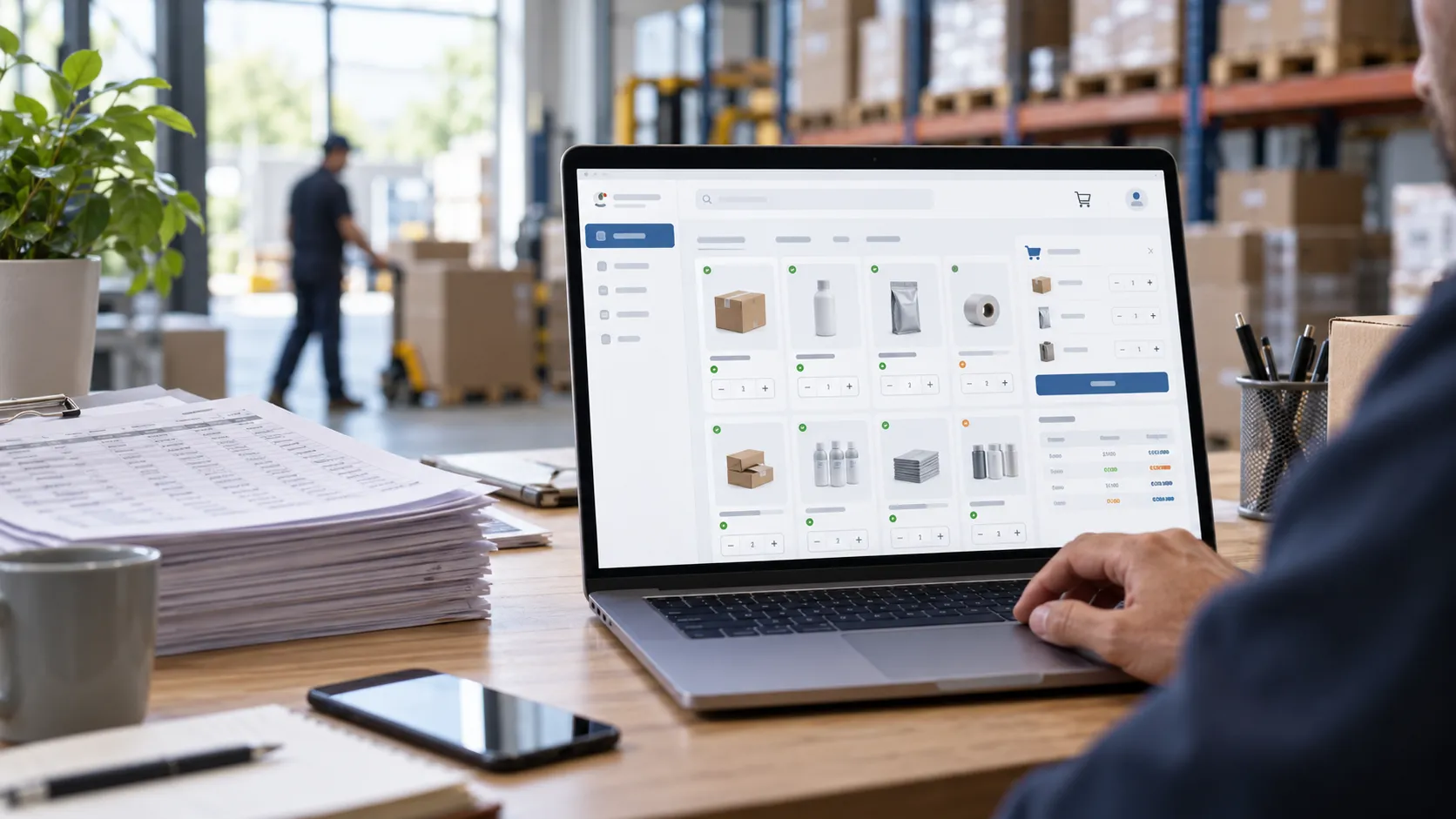
Many wholesale businesses still handle sales in much the same way.
A manager sends a customer an Excel file or PDF price list. The buyer selects the products, replies by email or sends an order through a messenger. The manager then manually checks stock levels, current prices, minimum order requirements, product availability, and delivery terms.
If some products are no longer available, another round of messages begins.
If prices have changed, a new price list has to be sent.
If the customer has an individual discount, the manager has to remember to apply it manually.
This approach can work when the number of customers is small. But as the business grows, it takes more time and becomes a source of errors.
A modern wholesale online store solves the problem differently: the customer sees their own assortment, prices, and current availability, builds the order, and submits it directly through the system without endless exchanges of spreadsheets.
Why a price list is no longer enough
There is nothing inherently wrong with Excel.
The problem begins when it becomes the main interface between a company and its customers.
A price list starts becoming outdated almost immediately.
Between the moment it is sent and the moment the customer places an order, several things may change:
stock levels;
purchase costs;
selling prices;
product availability;
minimum order quantities;
supply conditions;
individual customer discounts.
As a result, the buyer is effectively placing an order based on a snapshot of data that may already be several hours or several days old.
The manager then has to adjust that order manually to reflect the real situation.
This means more calls, more emails, and more corrections.
The problem becomes especially noticeable in companies with large catalogs, multiple warehouses, or different prices for different customer groups.
A wholesale store is not just a retail store with a Buy button
A B2B store is sometimes treated as a regular online store with hidden retail prices.
In practice, wholesale businesses usually have very different requirements.
One customer may buy at the standard wholesale price, another may have a 7% discount, and a third may work under individually negotiated terms.
Different customers may have different:
prices;
product ranges;
minimum order quantities;
minimum order values;
available warehouses;
payment methods;
delivery terms;
payment deferrals;
access to certain product categories.
That means a good wholesale store needs to understand who is currently logged in.
After authentication, the buyer should see the terms that apply specifically to their account.
In practice, the online store becomes a purchasing portal for each customer.
What a proper wholesale ordering process looks like
Consider a regular returning customer.
The old process may look like this:
request the latest price list → receive the file → open Excel → find the products → send the list to the manager → wait for verification → adjust the order → receive the invoice.
In a B2B store, the process can be much simpler.
The customer logs in and immediately sees:
products available to them;
current prices;
personal discounts;
stock availability;
quantities available in warehouses;
minimum order quantities;
delivery information.
They build the order and submit it.
The order is then created directly in the company’s system and can be transferred automatically to an ERP, CRM, warehouse management system, accounting platform, or other internal software.
The manager no longer has to copy products from an email into the back office.
They start with a properly structured order.
Managers are still important
Automating B2B sales does not mean replacing the sales team.
It means removing the most repetitive parts of their work.
For example:
“Can you send me the latest price list?”
“Is this product available?”
“What discount do we currently have?”
“What is the minimum quantity?”
“Did you receive my order?”
A well-designed system can answer many of these questions automatically.
That leaves managers more time for tasks where human involvement actually matters:
key account management;
assortment recommendations;
negotiations;
individual commercial terms;
upselling;
handling exceptional orders;
developing customer relationships.
In other words, managers spend less time transferring data and more time actually selling.
Reordering is especially important in B2B
Retail purchases are often one-off transactions.
Wholesale customers may order the same products every week or every month.
That is why B2B stores benefit from features that may be secondary in traditional retail:
repeat a previous order;
add products by SKU;
quickly change quantities;
add multiple items at once;
save frequently purchased products;
review order history;
download documents.
If a customer buys 80 or 100 items at a time, they do not need a visually impressive catalog that forces them to open every product page individually.
They need a fast and practical working interface.
That is one of the biggest differences between B2B and standard retail e-commerce.
Individual pricing should be handled by the system
One of the main reasons wholesale companies continue using spreadsheets is complex pricing.
In practice, there may be many different pricing models:
a fixed price for a customer group;
a percentage discount;
a special price for a specific customer;
volume-based pricing;
different prices for different markets;
separate dealer terms.
A modern e-commerce platform can move these rules directly into the system.
The customer logs in and immediately sees the correct price.
They do not need to ask the manager.
And the company does not have to recalculate every order manually.
Stock data needs to be current
The second major source of problems is product availability.
When a customer receives a static price list, they often have no idea how much stock is actually available.
This becomes even more complicated when the company operates several warehouses.
An online store can show real-time availability or at least a clear status:
in stock;
low stock;
available on order;
expected soon;
unavailable.
With integration into an accounting or ERP system, stock levels can be updated automatically.
The customer then builds the order using current information instead of outdated data.
A B2B store works best when connected to the company’s internal systems
The online store does not necessarily need to become the main source of all company data.
In many businesses, product information, prices, stock levels, and documents are already managed in an ERP or accounting system.
In that case, the store becomes the customer-facing interface.
The internal system can provide:
products;
prices;
stock levels;
specifications;
statuses.
The online store sends orders back.
With the right integration, employees do not have to enter the same information twice.
Why PrestaShop works well for this kind of project
A B2B portal does not always need to be developed from scratch.
One option is to use PrestaShop.
PrestaShop already provides most of the infrastructure required for e-commerce:
product catalog;
categories;
attributes and combinations;
customers;
customer groups;
specific pricing;
shopping cart;
checkout;
stock management;
orders;
payments;
delivery;
APIs and integrations.
For a wholesale project, this foundation can be extended with the business rules of a specific company.
For example:
restrict the catalog to authenticated customers;
assign different prices to different customer groups;
hide selected categories;
set minimum quantities;
set a minimum order value;
add quick ordering by SKU;
integrate with ERP or accounting software;
automate documents and order statuses.
Another advantage is that PrestaShop remains an independent e-commerce platform. The company is not locked into a closed website builder and can continue developing the store as the business grows.
Not every wholesaler needs a large custom development project
This is an important point.
Not every company needs a B2B platform that takes six months to develop and requires a large upfront budget.
Sometimes the goal is much simpler:
stop sending price lists and give customers a proper purchasing account.
In that case, a ready-made online store configured for wholesale sales may be enough.
One option is to rent a PrestaShop-based online store.
The company receives a working platform, and it can then be configured around its own business processes:
catalog;
customer groups;
pricing;
minimum quantities;
payment methods;
delivery;
domain;
integrations;
design.
This approach makes it possible to avoid building the entire store infrastructure from scratch and to test the new ordering model much faster.
It is especially suitable for small and medium-sized wholesale businesses that want to move away from Excel files, email orders, and messengers, but are not yet ready for a large custom IT project.
Start with the business process, not the design
When building a wholesale store, it is tempting to start with the homepage design.
For B2B, that is far from the most important question.
The first step should be to describe the real sales process.
For example:
Who is the customer?
When do they get access to the catalog?
Does everyone have the same prices?
Is there a minimum order value?
Can products be purchased individually?
Are there pack-size requirements?
Where does stock data come from?
How is the invoice generated?
Are deferred payments supported?
Can the customer place an order when some products are unavailable?
Only after answering these questions does it make sense to design the store itself.
A good B2B interface should reflect the company’s actual business processes instead of forcing the business to adapt to a generic online store template.
The transition can be gradual
There is no need to stop taking orders by phone or email overnight.
In many cases, a gradual transition works better.
First, a small group of regular customers starts using the store.
Feedback is collected.
Quick-order features are added.
Inconvenient scenarios are corrected.
Then more customers are moved to the online account.
Over time, the store becomes the main ordering channel, while email and phone remain as additional options.
This allows the company to automate the process without forcing a sudden change in established customer habits.
What the wholesale business ultimately gains
The main advantage of a B2B store is not simply that customers can place orders online.
The real value is the creation of a single digital channel between the company and the buyer.
The customer sees current information and can place an order whenever it is convenient.
The manager no longer needs to keep sending price lists and manually transferring orders.
Prices and stock levels can be synchronized automatically from internal systems.
Order history is stored in one place.
And the business gets a platform that can continue to grow: new warehouses, delivery services, automated payments, CRM integrations, ERP integrations, analytics, and mobile solutions can all be added later.
Excel can still remain an internal working tool.
But it stops being the storefront.
That is the key change: a wholesale customer should not be working with a file that was sent yesterday. They should be working with a system that shows what is available right now.